
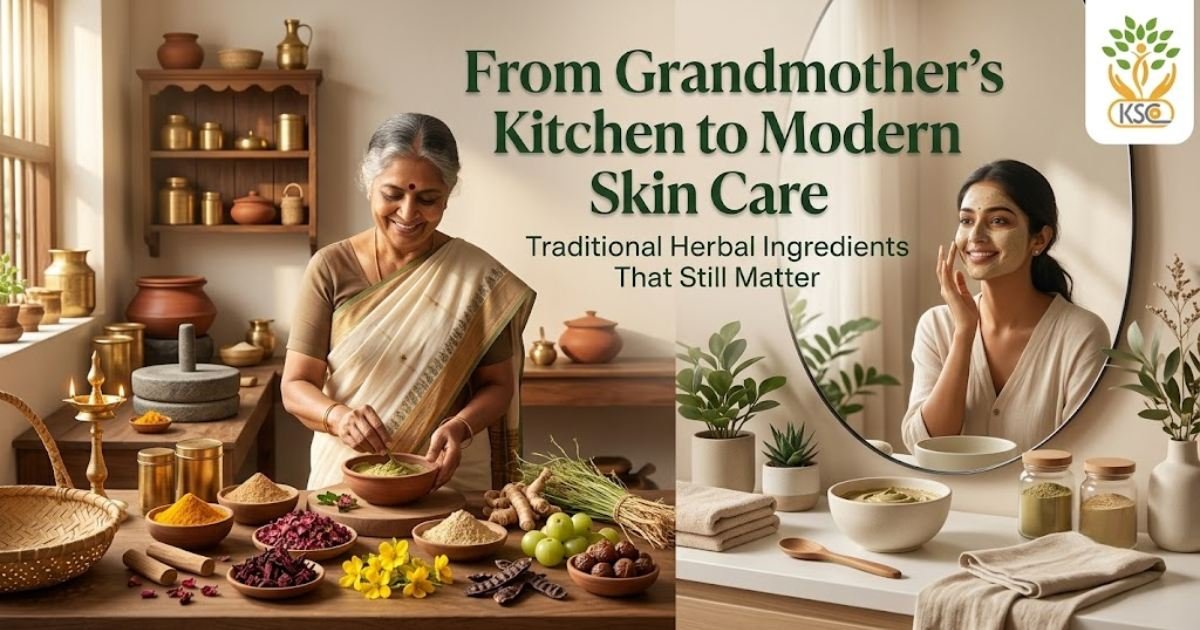
From Grandmother’s Kitchen to Modern Skin Care: Traditional Herbal Ingredients That Still Matter

Introduction
For many people, the kitchen is simply a place to prepare meals. But in traditional Tamil households, it was much more than that. It was also where natural beauty routines began. Shelves filled with herbs, spices, flowers, and roots were not only used for cooking but also for preparing homemade skin care and hair care remedies that became part of everyday life.
Long before commercial face washes, scrubs, and beauty creams became popular, families relied on simple herbal ingredients that were easily available at home. A small bowl of Kasturi Turmeric Powder, freshly dried Rose Petals, fragrant Sandalwood Powder, or a handful of Dry Hibiscus Flowers could become part of a weekly beauty ritual. These traditions were not driven by trends but by generations of practical knowledge passed from elders to younger family members.
Today, as more people look for ingredient-conscious skincare and sustainable beauty choices, these traditional herbal ingredients are finding their way back into modern routines. Rather than replacing modern skincare, they complement it by encouraging a simpler, more mindful approach to personal care.
In this article, we’ll explore some of the most treasured herbal ingredients from Tamil households, understand why they continue to matter, and discover how they can still be part of everyday skincare and self-care routines.
The Kitchen: The First Beauty Cabinet
If you visited a Tamil home several decades ago, you would rarely find shelves lined with branded cosmetic products. Instead, there would be carefully stored containers of herbal powders, dried flowers, and natural ingredients that served multiple purposes.
One ingredient might be used for cooking, another for religious rituals, while another became part of a face pack or bathing preparation.
This approach reflected a simple philosophy—use natural ingredients wisely and avoid unnecessary complexity.
Among the most commonly stored ingredients were:
- Kasturi Turmeric Powder
- Virali Manjal
- Gundu Manjal
- Rose Petal Powder
- Dry Hibiscus Flower
- Dried Avarampoo
- Pure Sandalwood Powder Face Pack
- Multani Mitti Powder
- Vetiver Root
Many of these ingredients continue to be available today through trusted Natural Herbal Products, allowing families to preserve traditional beauty practices with ease.
Why Traditional Herbal Ingredients Were Trusted
Traditional skincare routines were built around familiarity and consistency. Families used ingredients they understood because they had seen them prepared and used for years.
There was a strong belief that personal care should be simple, practical, and based on natural ingredients that were already part of everyday household life.
Unlike modern routines that often involve multiple specialized products, traditional preparations focused on a handful of versatile herbs that could be used in different ways depending on the occasion.
This approach also encouraged people to understand the ingredients they were using rather than relying solely on product labels.
Kasturi Turmeric – A Timeless Beauty Ingredient
Among all traditional skincare ingredients, Kasturi Turmeric Powder remains one of the most recognised.
For generations, it has been used in:
- Weekly face packs
- Bridal beauty rituals
- Herbal bathing preparations
- Family skincare traditions
In many homes, Kasturi turmeric was mixed with rose water, milk, or other herbal powders to prepare fresh face packs.
K Somu Chetty & Co also offers Virali Manjal and Gundu Manjal, two traditional turmeric varieties that continue to be appreciated in heritage beauty practices.
Together, these products represent the deep cultural connection between turmeric and Tamil skincare traditions.
Rose Petals – Beauty Inspired by Nature
Flowers have always held a special place in Tamil culture, and roses are no exception.
Fresh roses were traditionally used for decoration, worship, and celebrations, while dried rose petals became valuable ingredients in homemade skincare preparations.
Today, products such as:
- Rose Petals Dry
- Rose Petal Powder
continue this tradition.
Rose petals are commonly included in:
- Herbal face packs
- Floral skincare mixtures
- Traditional beauty preparations
- Bridal skincare routines
Their natural fragrance and versatility have made them one of the most enduring ingredients in herbal skincare.
Sandalwood – A Symbol of Traditional Elegance
Few ingredients are as closely associated with traditional South Indian beauty as sandalwood.
Its distinctive fragrance and cultural importance have made it a favourite ingredient for generations.
Pure Sandalwood Powder Face Pack is commonly included in preparations made for:
- Weekly skincare
- Bridal beauty rituals
- Festival grooming
- Traditional facial packs
Sandalwood is often combined with Kasturi turmeric or Rose Petal Powder to create simple yet elegant herbal skincare preparations inspired by family traditions.
Multani Mitti – The Traditional Clay Face Pack
Although Multani Mitti has become popular across the world, it has been used in Indian beauty routines for generations.
Multani Mitti Powder (Fuller’s Earth) is commonly chosen for clay-based face packs prepared at home.
Many traditional mixtures combine it with:
- Rose Petal Powder
- Beetroot Powder
- Kasturi Turmeric Powder
At K Somu Chetty & Co, the Beetroot Powder & Multani Mitti Powder Combo reflects this traditional combination while making it convenient for modern users.
Hibiscus – More Than a Garden Flower
In Tamil homes, hibiscus was never considered just an ornamental flower.
The flowers were carefully dried and preserved because they played an important role in traditional beauty routines.
Dry Hibiscus Flower continues to be widely used in:
- Hair packs
- Herbal hair wash mixtures
- Oil infusions
- Weekly hair care preparations
When paired with Amla Powder, Hermix Shikakai Powder, or Dried Rosemary Leaves, hibiscus becomes part of a complete herbal hair care routine inspired by generations of traditional knowledge.
Avarampoo – A Traditional Flower That Continues to Inspire Natural Beauty
Avarampoo has been a familiar ingredient in South Indian households for generations. Its bright yellow flowers are often associated with traditional herbal preparations, and many families have included them in beauty routines passed down over the years.
Today, Dried Avarampoo remains one of the popular ingredients for homemade herbal face packs and natural skincare preparations. It is also available as part of the Dry Avarampoo & Dried Rose Petals Combo, making it easier to recreate traditional floral skincare recipes.
In many homes, avarampoo is combined with:
- Rose Petal Powder
- Kasturi Turmeric Powder
- Pure Sandalwood Powder
- Multani Mitti Powder
These combinations reflect the simplicity of traditional skincare, where a few carefully selected ingredients were blended to suit weekly beauty routines.
Vetiver – The Fragrance of Traditional Tamil Homes
If there is one ingredient that immediately reminds many people of traditional Tamil households, it is Vetiver Root.
Its naturally earthy fragrance made it much more than a skincare ingredient. Families often used vetiver in multiple ways throughout the home.
Traditional uses included:
- Herbal bathing preparations
- Water pots for natural fragrance
- Decorative vetiver garlands
- Natural room fragrance
- Herbal body care
Today, K Somu Chetty & Co continues this tradition through products such as:
- Vetiver Root
- Vetiver Scrubber
- Vetiver Coconut Scrub
- Vetiver Garland – Open
- Vetiver Garland – Closed
These products help preserve one of Tamil Nadu’s most cherished herbal traditions.
Herbal Bath Powders: A Daily Tradition
Modern body washes and shower gels are convenient, but many families still remember preparing herbal bath powders at home.
Bathing was often treated as a complete self-care ritual rather than a quick daily task.
Traditional bathing preparations commonly included ingredients such as:
- Kasturi Turmeric
- Rose Petals
- Vetiver
- Herbal flowers
- Natural grains
At K Somu Chetty & Co, products such as:
continue to represent these traditional bathing practices.
Many people who explore Organic Herbal Products today choose herbal bath powders because they appreciate routines inspired by heritage rather than convenience alone.
Why Traditional Herbal Ingredients Are Relevant Today
Although lifestyles have changed significantly, traditional herbal ingredients continue to hold their value.
One reason is transparency.
People increasingly want to understand the ingredients they use every day. Traditional herbal powders are familiar, easy to recognise, and have remained part of household practices for generations.
Another reason is sustainability.
Rather than buying multiple products for different purposes, many herbal ingredients can be used in several ways.
For example:
Kasturi Turmeric Powder
Can be included in:
- Weekly face packs
- Herbal bathing preparations
- Bridal beauty routines
Rose Petal Powder
Can be used in:
- Face packs
- Floral skincare recipes
- Herbal beauty mixtures
Dry Hibiscus Flower
Can be prepared for:
- Hair care
- Herbal conditioning
- Hair wash routines
This versatility makes traditional ingredients just as practical today as they were decades ago.
Building a Modern Skin Care Routine Using Traditional Herbal Ingredients
You don’t need to completely replace your current skincare products to enjoy traditional herbal ingredients.
Instead, consider introducing one or two simple rituals each week.
Weekly Face Care
Create a homemade face pack using:
- Kasturi Turmeric Powder
- Rose Petal Powder
- Pure Sandalwood Powder Face Pack
Weekly Clay Mask
Combine:
- Multani Mitti Powder
- Beetroot Powder
The Beetroot Powder & Multani Mitti Powder Combo makes this preparation simple.
Weekly Hair Care
Prepare a herbal hair routine using:
- Hermix Shikakai Powder
- Dry Hibiscus Flower
- Amla Powder
- Dried Rosemary Leaves
These ingredients are also available as part of the Herbal Hair Wash Combo and Herbal Hair Growth Support Combo.
Traditional Bathing
Use products such as:
- Mooligai Kuliyal Powder
- Vetiver Scrubber
- Peerkangai Scrub
to recreate traditional bathing practices at home.
These small habits allow modern lifestyles to reconnect with generations of traditional knowledge.
Choosing Authentic Herbal Ingredients Matters
As interest in natural skincare continues to grow, it is important to purchase herbal ingredients from trusted heritage brands.
Authentic products help preserve traditional preparation methods while ensuring consistency and quality.
At K Somu Chetty & Co, every product reflects decades of experience in offering traditional herbal ingredients that continue to inspire modern lifestyles.
Whether you are looking for skincare powders, herbal hair care ingredients, bathing products, or traditional pooja essentials, the collection is carefully curated to honour Tamil heritage.
For those looking to Buy Herbal Products Online, choosing a heritage brand provides confidence that the products remain true to traditional practices.
Preserving Tradition for Future Generations
The beauty of traditional herbal ingredients lies not only in how they are used but also in the stories they carry.
Every container of turmeric, every handful of dried flowers, and every herbal powder reminds us of a time when beauty routines were simple, seasonal, and closely connected to everyday life.
As younger generations rediscover these ingredients, they are not simply following a trend. They are continuing a cultural tradition that has been part of Tamil households for centuries.
Keeping these traditions alive helps preserve knowledge that might otherwise be forgotten.
Conclusion
Traditional herbal ingredients have travelled an extraordinary journey—from the shelves of grandmother’s kitchen to today’s modern skincare routines. Ingredients such as Kasturi Turmeric, Rose Petal Powder, Multani Mitti, Sandalwood, Hibiscus, Vetiver, and Avarampoo continue to demonstrate that simple, natural preparations never go out of style.
At K Somu Chetty & Co, these ingredients are more than products—they represent generations of heritage, trusted household practices, and a commitment to preserving Tamil Nadu’s rich herbal traditions.
Whether you are beginning your journey into natural skincare or continuing family traditions, these timeless herbal ingredients offer a meaningful way to connect modern self-care with the wisdom of the past.
Frequently Asked Questions
What are the most popular traditional herbal ingredients used in Tamil skincare?
Some of the most commonly used ingredients include Kasturi Turmeric, Rose Petal Powder, Multani Mitti, Sandalwood Powder, Hibiscus, Avarampoo, and Vetiver. These ingredients have been part of household beauty routines for generations.
Why were herbal ingredients stored in traditional Tamil kitchens?
Many herbal ingredients served multiple purposes, including cooking, skincare, hair care, bathing, and household rituals. Keeping them in the kitchen made them easily accessible for everyday use.
Can traditional herbal ingredients be included in modern skincare routines?
Yes. Many people incorporate herbal face packs, herbal bath powders, and weekly hair care routines alongside their regular skincare products.
Which K Somu Chetty & Co products are suitable for beginners?
Beginners can start with Kasturi Turmeric Powder, Rose Petal Powder, Multani Mitti Powder, Pure Sandalwood Powder Face Pack, Hermix Shikakai Powder, and Mooligai Kuliyal Powder.
How do I choose authentic herbal products?
Look for trusted heritage brands that specialise in traditional herbal ingredients and provide products prepared using established methods.
Where can I buy traditional herbal products online?
You can Buy Herbal Products Online from K Somu Chetty & Co, which offers a wide range of skincare, hair care, bathing, wellness, and pooja products inspired by traditional Tamil practices.


