
Why Every Tamil Household Once Had a Herbal Powder Shelf

Introduction
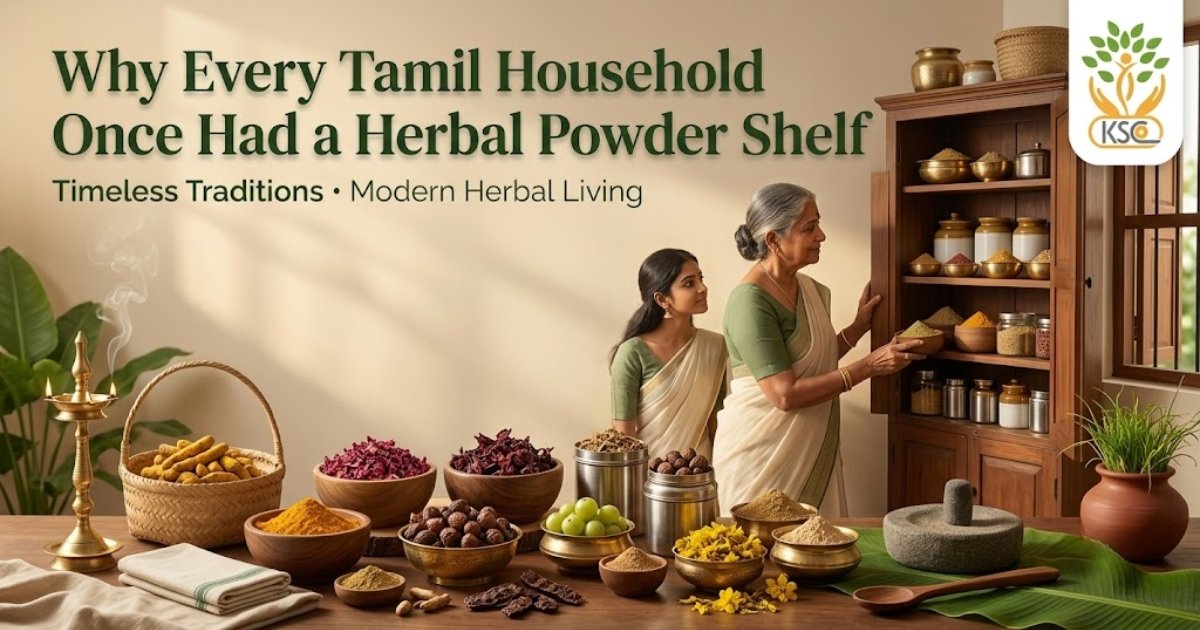
Walk into a traditional Tamil home a few decades ago, and you would often find a small wooden cupboard, a neatly arranged kitchen shelf, or a collection of steel containers filled with carefully labelled herbal powders. These weren’t expensive beauty products or modern wellness supplements. They were simple, everyday ingredients that played an important role in family life.
Each powder had its own purpose. Some were prepared for weekly bathing, others for hair care, while a few were reserved for special occasions like festivals, weddings, or religious ceremonies. Grandmothers knew exactly which ingredient to take out depending on the season, the occasion, or the family’s daily routine. These herbal powders were more than household essentials—they represented generations of practical knowledge, natural living, and a deep connection with Tamil traditions.
Over time, changing lifestyles, urban living, and the convenience of ready-made products slowly pushed many of these traditional ingredients into the background. Yet today, there is a renewed appreciation for herbal products as people look for simpler, ingredient-focused personal care routines inspired by traditional wisdom.
This article explores why herbal powders were once a permanent part of every Tamil household, the role they played in everyday life, and how these timeless traditions continue to inspire modern natural living.
A Shelf That Held More Than Just Ingredients
For many families, the herbal powder shelf was not a luxury—it was simply part of the home.
Instead of stocking multiple bottles of cleansers, scrubs, shampoos, and cosmetic products, households relied on a handful of trusted herbal ingredients that could be used in different ways. One ingredient might be mixed into a face pack, another into a bathing powder, while another became part of a weekly hair care routine.
These shelves often contained ingredients such as:
- Kasturi Turmeric
- Virali Manjal
- Gundu Manjal
- Shikakai
- Soapnut
- Rose Petals
- Hibiscus Flowers
- Vetiver Root
- Sandalwood Powder
- Avarampoo
Every ingredient had its own place, and every family member understood its purpose through observation and tradition rather than written instructions.
Today, many of these same ingredients are available through Natural Herbal Products, making it possible to continue these household traditions in a convenient way.
Learning Through Observation, Not Instructions
One of the most fascinating aspects of traditional Tamil households was how knowledge was shared.
There were rarely recipe books explaining how to prepare a herbal face pack or hair wash. Children simply watched their parents and grandparents.
A grandmother preparing a herbal bath before sunrise…
A mother grinding dried hibiscus flowers for the weekly hair wash…
A grandfather placing Vetiver Root inside a clay water pot to add a pleasant natural fragrance…
These everyday moments became lessons that were quietly passed from one generation to the next.
This informal learning created a strong understanding of natural ingredients and encouraged families to appreciate locally available herbs rather than depending on manufactured products.
Herbal Powders Were Part of Everyday Life
Unlike today, where skincare and wellness products are often marketed as luxury purchases, herbal powders were considered practical household essentials.
A few examples include:
Morning Bathing
Instead of reaching for a bottle of body wash, many families prepared Mooligai Kuliyal Powder or herbal bathing mixtures using ingredients such as:
- Kasturi Turmeric
- Green gram
- Rose petals
These preparations became part of regular bathing routines.
Weekly Hair Care
Hair washing was often a dedicated weekly ritual rather than a hurried daily activity.
Traditional hair care preparations commonly included:
- Hermix Shikakai Powder
- Soapnut Powder
- Dry Hibiscus Flower
- Amla Powder
Some households also added Dried Rosemary Leaves to homemade preparations.
The process itself became an opportunity to slow down and care for both hair and scalp using familiar natural ingredients.
Evening Household Rituals
As daylight faded, many Tamil homes filled with the calming fragrance of burning Sambrani, Paal Sambrani, or Indira Premium Dhoop Sticks.
This daily practice was often associated with:
- evening prayers
- welcoming guests
- refreshing living spaces
- family gatherings
The herbal shelf therefore extended beyond beauty and personal care—it also supported the spiritual and cultural atmosphere of the home.
Every Season Had Its Own Herbal Routine
Traditional households understood that personal care routines changed throughout the year.
During Summer
Cooling ingredients were preferred.
Families often reached for:
- Vetiver Root
- Badam Pisin
- Sabja Seeds
- Nannari
These ingredients became part of seasonal household routines and reflected an understanding of adapting daily habits to the changing weather.
During Monsoon
The rainy season often brought adjustments to hair care routines.
Many families continued using:
- Shikakai
- Hibiscus
- Rosemary
- Amla
These ingredients were commonly prepared fresh and used during regular weekly hair care.
During Winter
When the weather became cooler, herbal body care routines often included:
- Rose Petal Powder
- Pure Sandalwood Powder
- Kasturi Turmeric
These ingredients were frequently mixed into simple skincare preparations.
This seasonal approach is one of the reasons traditional herbal routines remain relevant even today—they adapted naturally to changing lifestyles and environmental conditions.
One Ingredient, Many Uses
Perhaps the biggest difference between traditional households and modern routines was versatility.
Today, we often buy separate products for cleansing, exfoliating, hair care, and personal care.
Traditional families looked at ingredients differently.
For example:
Kasturi Turmeric
It could be included in:
- weekly face packs
- bridal beauty preparations
- herbal bathing powders
Rose Petals
They appeared in:
- face packs
- bathing preparations
- floral household rituals
Vetiver
Families used it:
- in bathing routines
- in water pots
- in decorative garlands
- for natural fragrance
Hibiscus
It was prepared for:
- hair packs
- herbal washes
- oil infusions
Instead of dozens of specialised products, a small collection of herbs met many household needs.
Why Traditional Herbal Powder Shelves Slowly Disappeared
As lifestyles changed, so did household routines. Urban living, smaller families, and busier schedules meant that many traditional practices were gradually replaced by ready-to-use products.
Instead of preparing herbal face packs at home, people began purchasing packaged skincare products. Herbal hair wash powders gave way to bottled shampoos, and traditional bath powders were often replaced by soaps and shower gels.
Another reason was the gradual loss of intergenerational knowledge. Earlier, children learned these practices by watching parents and grandparents. As lifestyles became faster and more urban, fewer families continued preparing herbal mixtures at home, and many traditional recipes were no longer passed down.
Despite this shift, the appreciation for natural ingredients never completely disappeared. Today, many people are once again looking for authentic herbal products because they want to understand what they are using and reconnect with simpler routines.
The Revival of Traditional Herbal Living
Over the last few years, there has been renewed interest in traditional wellness and natural personal care. Consumers are reading ingredient labels more carefully, searching for authentic herbal products, and exploring routines that are inspired by cultural traditions.
This renewed interest is not about replacing modern life—it is about bringing back simple habits that have stood the test of time.
People are increasingly exploring products such as:
- Kasturi Turmeric Powder
- Multani Mitti Powder
- Pure Sandalwood Powder Face Pack
- Rose Petal Powder
- Hermix Shikakai Powder
- Soapnut Powder
- Dry Hibiscus Flower
- Amla Powder
These ingredients allow families to recreate traditional preparations without spending hours sourcing or preparing herbs from scratch.
Building Your Own Herbal Powder Shelf Today
You don’t need dozens of products to begin a traditional herbal routine. A thoughtfully selected collection of herbal ingredients can support simple skincare, hair care, bathing, and household practices.
A beginner’s herbal shelf could include:
For Skin Care
- Kasturi Turmeric Powder
- Multani Mitti Powder
- Pure Sandalwood Powder Face Pack
- Rose Petal Powder
These ingredients can be used in homemade face packs inspired by traditional Tamil beauty practices.
For Hair Care
- Hermix Shikakai Powder
- Amla Powder
- Dry Hibiscus Flower
- Dried Rosemary Leaves
- Soapnut Powder
These products can become part of a weekly herbal hair care routine that reflects generations of household traditions.
For Bathing
Traditional bathing continues to be one of the easiest ways to introduce herbal products into everyday life.
Popular products include:
- Mooligai Kuliyal Powder Grade 1
- Mooligai Kuliyal Powder Grade 2
- Shikai Set / Bath Set
- Vetiver Scrubber
- Vetiver Coconut Scrub
- Peerkangai Scrub
These products represent some of the oldest bathing traditions still followed in many South Indian homes.
For Home Fragrance & Rituals
A traditional herbal shelf often extended beyond beauty products.
Many families also kept:
- Natural Katti Sambrani
- Sambrani Powder
- Paal Sambrani
- Cone Sambrani
- Indira Premium Dhoop Sticks
- Karpuram
- Pacha Karpuram
These products continue to play an important role in everyday pooja routines and household traditions.
Why Heritage Brands Matter
When buying herbal products, authenticity matters just as much as the ingredient itself.
A heritage brand understands not only what the product is but also how it has traditionally been used. This knowledge helps preserve cultural practices while making them accessible to modern families.
At K Somu Chetty & Co, every product reflects a commitment to preserving Tamil Nadu’s herbal traditions. Whether it is a simple herbal powder, a bathing preparation, or a pooja essential, the focus remains on offering products inspired by time-tested household practices.
For those looking to explore Natural Herbal Products, choosing a trusted heritage brand provides confidence in both quality and tradition.
Bringing Tradition Into Modern Living
Modern lifestyles are different from those of previous generations, but that doesn’t mean traditional practices have no place today.
Many people now choose to:
- Prepare a herbal face pack every weekend.
- Use herbal hair wash powders once a week.
- Include herbal bath powders in their self-care routine.
- Burn Sambrani during evening prayers.
- Keep Vetiver Root at home for its natural fragrance.
These small habits help reconnect families with traditions while fitting comfortably into modern routines.
Traditional living is not about going backward—it is about preserving valuable practices that continue to have meaning today.
Why K Somu Chetty & Co Is Keeping These Traditions Alive
For generations, K Somu Chetty & Co has been associated with authentic herbal products inspired by Tamil heritage. Rather than following passing trends, the brand focuses on ingredients that have remained part of traditional households for decades.
From Kasturi Turmeric Powder, Multani Mitti Powder, and Rose Petal Powder to Hermix Shikakai Powder, Vetiver Root, Mooligai Kuliyal Powder, and Indira Premium Dhoop Sticks, every product reflects a connection to traditional practices.
For customers looking to Buy Herbal Products Online, K Somu Chetty & Co offers a carefully curated range that brings heritage and quality together.
Conclusion
The herbal powder shelf was once one of the most important corners of every Tamil household. It represented more than a collection of ingredients—it reflected generations of practical knowledge, natural living, and family traditions.
Although lifestyles have changed, the value of these herbal ingredients continues to remain relevant. By incorporating simple practices such as herbal face packs, traditional hair care, herbal bathing, and natural home fragrance into modern life, we can preserve a rich cultural heritage while enjoying routines inspired by nature.
At K Somu Chetty & Co, these traditions continue through carefully selected herbal products that honour the wisdom of the past while supporting the needs of today’s families.
Frequently Asked Questions
Why were herbal powders commonly found in traditional Tamil homes?
Herbal powders were everyday household essentials used for skincare, hair care, bathing, and religious rituals. Families relied on natural ingredients because they were easily available and became part of routines passed down through generations.
What herbal powders were most commonly used?
Some of the most popular ingredients included Kasturi Turmeric, Shikakai, Amla, Rose Petal Powder, Multani Mitti, Sandalwood Powder, Hibiscus, Vetiver, and Soapnut.
Why are traditional herbal products becoming popular again?
Many people are looking for simpler routines, natural ingredients, and products that reflect traditional practices. Heritage-inspired personal care has seen renewed interest as consumers become more conscious about ingredient choices.
How can beginners start using traditional herbal products?
A good starting point is to choose a few versatile products such as Kasturi Turmeric Powder, Rose Petal Powder, Hermix Shikakai Powder, and Mooligai Kuliyal Powder. These can be gradually incorporated into weekly skin, hair, and bathing routines.
Where can I buy authentic traditional herbal products online?
You can Buy Herbal Products Online from trusted heritage brands like K Somu Chetty & Co, which offers a wide range of products inspired by traditional Tamil household practices.
Does K Somu Chetty & Co offer products for skincare, haircare, bathing, and pooja?
Yes. The collection includes herbal powders, hair care ingredients, bathing products, Vetiver products, Sambrani, Dhoop Sticks, Camphor, herbal combos, and many other traditional products that reflect the brand’s heritage.


