
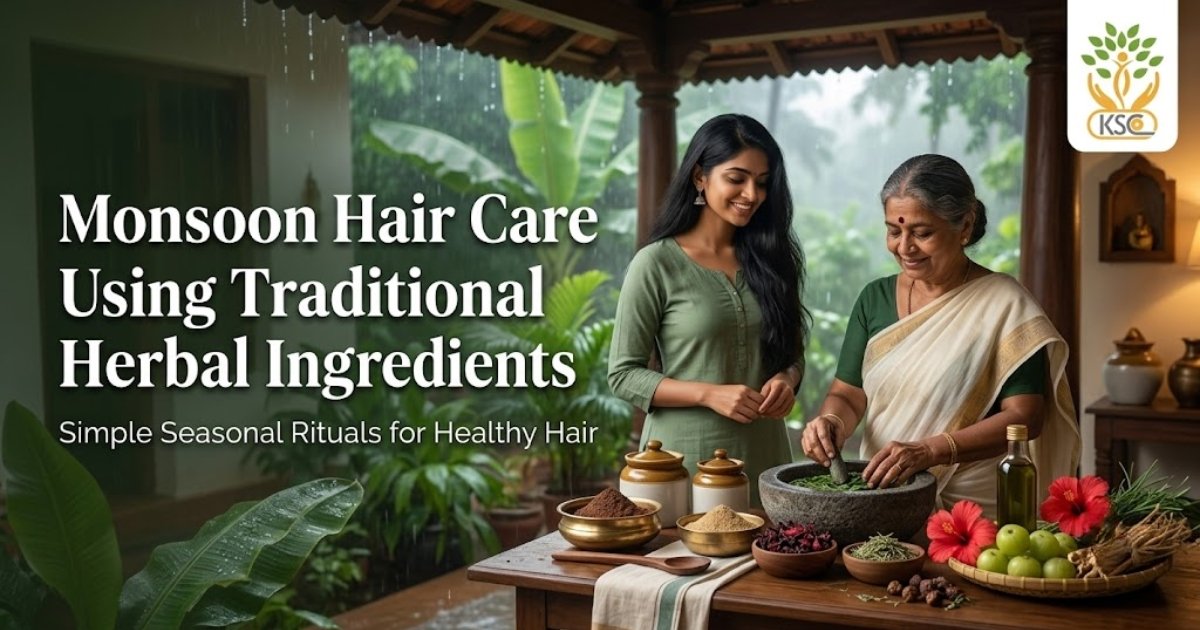
Monsoon Hair Care Using Traditional Herbal Ingredients

Introduction
The arrival of the monsoon brings welcome relief from the summer heat. The cool breeze, refreshing rains, and pleasant weather make it one of the most loved seasons in India. However, while the season is enjoyable, it also calls for a few changes in personal care routines, especially when it comes to hair care.
In many Tamil households, seasonal changes were never ignored. Just as food habits changed according to the weather, traditional hair care routines also adapted to different seasons. During the monsoon, families often paid extra attention to cleansing the scalp, maintaining healthy-looking hair, and choosing simple herbal preparations that fit into their weekly routines.
Instead of relying on a single product throughout the year, traditional practices encouraged the use of natural ingredients such as Shikakai, Hibiscus, Amla, Soapnut, and various herbs that were carefully prepared at home. These ingredients became part of a balanced routine that focused on consistency rather than complexity.
Today, many people are once again exploring these heritage-inspired methods, appreciating the simplicity of herbal ingredients and the timeless wisdom behind traditional hair care. In this guide, we’ll explore how Tamil households traditionally cared for their hair during the rainy season and how you can bring those practices into your modern routine.
Why Hair Care Changes During the Monsoon
Every season presents different challenges, and traditional Indian households understand the importance of adjusting personal care routines accordingly.
During the rainy season, the environment becomes more humid. Hair may feel heavier, and many people prefer cleansing routines that leave the scalp feeling fresh and comfortable. This is why seasonal herbal preparations have remained an important part of traditional hair care for generations.
Rather than introducing entirely new ingredients, families often adjusted the frequency of their existing herbal routines and chose ingredients that were already familiar to them.
This practical approach continues to make sense today, as it encourages consistency rather than frequent product changes.
Traditional Hair Care Was Always Seasonal
One of the defining characteristics of Tamil household traditions is that personal care was closely connected to the seasons.
During Summer
Cooling herbs and refreshing bathing routines were preferred.
During the Monsoon
Greater attention was given to regular cleansing and maintaining a balanced weekly routine.
During Winter
Families often focused on nourishing herbal preparations and oil-based care.
This seasonal rhythm helped create simple habits that naturally adapted throughout the year.
The Five Essential Herbs Used During the Monsoon
Traditional hair care relied on a handful of ingredients that worked well together.
1. Hermix Shikakai Powder
Shikakai has been one of the most trusted ingredients in South Indian hair care for generations.
It is commonly used as part of traditional herbal hair wash preparations and remains one of the first ingredients many people choose when exploring natural hair care.
At K Somu Chetty & Co, Hermix Shikakai Powder continues this long-standing tradition.
2. Dry Hibiscus Flower
Hibiscus flowers have been carefully dried and preserved in Tamil households for decades.
Traditionally, they are included in:
- Herbal hair packs
- Hair wash mixtures
- Oil preparations
- Weekly hair care routines
Their popularity has remained strong because they fit naturally into homemade herbal preparations.
3. Amla Powder
Amla has long been part of traditional Indian personal care.
In many households, it is combined with other herbal powders rather than used on its own.
Common combinations include:
- Amla + Shikakai
- Amla + Hibiscus
- Amla + Soapnut
This versatility makes it an essential ingredient in traditional hair routines.
4. Soapnut Powder (Poondhikottai Powder)
Before bottled shampoos became common, Soapnut Powder was one of the most widely used natural cleansing ingredients.
Its traditional use continues today among families who appreciate heritage-inspired hair care.
Many homemade preparations include Soapnut together with Shikakai and Amla.
5. Dried Rosemary Leaves
Although rosemary has gained popularity more recently, it blends well with traditional herbal hair care routines.
It is often used alongside:
- Hibiscus
- Amla
- Shikakai
The Dry Hibiscus & Dry Rosemary Combo available at K Somu Chetty & Co brings together two ingredients that work beautifully in modern herbal routines inspired by tradition.
A Simple Weekly Monsoon Hair Care Routine
Traditional routines were rarely complicated.
Instead of using different products every day, many families followed a simple weekly schedule.
Step 1 – Herbal Hair Oil
Before washing the hair, herbal oil was gently massaged into the scalp.
Products such as the Herbal Hair Oil Mix make it easy to include this traditional step in a modern routine.
The oil was usually left on the hair for some time before cleansing.
Step 2 – Herbal Hair Wash
Instead of shampoo, a freshly prepared herbal paste was often used.
A traditional mixture may include:
- Hermix Shikakai Powder
- Soapnut Powder
- Amla Powder
- Dry Hibiscus Flower
These ingredients are mixed with water to create a smooth paste and applied during hair washing.
For convenience, the Herbal Hair Wash Combo brings together several of these traditional ingredients.
Step 3 – Gentle Drying
Traditional practices also emphasized allowing hair to dry naturally whenever possible rather than exposing it to excessive heat.
This simple habit complemented the overall herbal hair care routine and reflected the practical wisdom of earlier generations.
Common Mistakes to Avoid During the Rainy Season
Traditional hair care was as much about avoiding certain habits as it was about using herbal ingredients.
Many families advised:
- Avoid leaving wet hair tied for long periods.
- Clean hair accessories regularly.
- Prepare fresh herbal mixtures whenever possible.
- Store herbal powders in airtight containers away from moisture.
- Maintain a consistent routine instead of changing products frequently.
These practical habits continue to remain relevant today.
Build a Simple Herbal Hair Care Kit for the Rainy Season
One of the biggest misconceptions about traditional hair care is that it requires dozens of herbs and complicated preparations. In reality, most Tamil households relied on a handful of trusted ingredients that could be used in different combinations throughout the year.
If you’re beginning a herbal hair care routine this monsoon, you don’t need an extensive collection. A carefully selected set of ingredients is enough to create a simple and consistent routine.
A beginner-friendly monsoon herbal hair care kit can include:
- Hermix Shikakai Powder
- Amla Powder
- Dry Hibiscus Flower
- Soapnut Powder (Poondhikottai Powder)
- Dried Rosemary Leaves
- Herbal Hair Oil Mix
These products have long been part of traditional hair care preparations and continue to be valued for their versatility.
Traditional Hair Care Was Never About One Ingredient
One lesson passed down through generations is that herbal hair care was never centred around a single ingredient.
Instead, families combined herbs thoughtfully depending on their routine and the season.
Some popular traditional combinations include:
Shikakai + Amla
A classic combination commonly prepared for weekly hair washing.
Hibiscus + Rosemary
A blend often included in herbal hair packs and oil infusions.
The Dry Hibiscus & Dry Rosemary Combo from K Somu Chetty & Co offers a convenient way to explore this traditional pairing.
Soapnut + Shikakai + Amla
One of the most recognised herbal cleansing combinations used across South India.
Herbal Hair Wash Combo
For those who prefer ready-to-use ingredient collections, the Herbal Hair Wash Combo brings together complementary herbs traditionally used in hair care.
Seasonal Hair Care Is About Consistency
One of the reasons traditional routines have survived for generations is their simplicity.
Rather than changing products every week, families maintained a consistent schedule.
A traditional weekly routine might look like this:
Once a Week
- Herbal oil massage
- Herbal hair wash
- Gentle natural drying
During the Week
- Protect hair from prolonged dampness
- Comb gently
- Store herbal powders properly
This balanced approach remains relevant today because it encourages regular care rather than overcomplicated routines.
Why More People Are Returning to Herbal Hair Care
In recent years, there has been renewed interest in traditional beauty practices.
Many people appreciate herbal routines because they:
- celebrate cultural heritage
- encourage ingredient awareness
- fit naturally into weekly self-care
- focus on simple, familiar herbs
- preserve traditional household knowledge
This growing appreciation has encouraged many families to rediscover Natural Herbal Products inspired by long-standing Tamil traditions.
Traditional Ingredients That Complement Monsoon Hair Care
While Shikakai, Hibiscus, and Amla remain the foundation of many routines, several other ingredients can also be part of a complete herbal collection.
These include:
Avuri Powder
Traditionally included in herbal hair preparations.
Henna Powder
Used in various traditional hair care practices.
Avuri Powder & Marudhani (Henna) Powder Combo
A convenient combination for those interested in heritage-inspired hair care.
Herbal Hair Growth Support Combo
A thoughtfully curated collection that brings together ingredients traditionally associated with regular hair care routines.
Together, these products allow individuals to customise their routines according to their personal preferences.
Storage Tips for Herbal Hair Powders During the Monsoon
Traditional households paid close attention to how herbal ingredients were stored.
The rainy season naturally brings higher humidity, making proper storage even more important.
To maintain freshness:
- Keep powders in airtight containers.
- Store them in a cool, dry place.
- Use dry spoons when handling products.
- Close containers immediately after use.
- Avoid exposing powders to excess moisture.
These simple habits help preserve the quality of herbal ingredients throughout the season.
Creating a Complete Herbal Hair Routine
For those looking to build a complete weekly routine, K Somu Chetty & Co offers a range of traditional products that work well together.
Hair Cleansing
- Hermix Shikakai Powder
- Soapnut Powder
- Herbal Hair Wash Combo
Hair Care
- Dry Hibiscus Flower
- Dried Rosemary Leaves
- Amla Powder
- Herbal Hair Growth Support Combo
Hair Oiling
- Herbal Hair Oil Mix
Together, these products make it easier to experience traditional hair care without having to source multiple ingredients separately.
Why Choose K Somu Chetty & Co?
Traditional herbal products are most valuable when they come from brands that understand their cultural significance.
K Somu Chetty & Co has built its reputation by preserving Tamil Nadu’s rich herbal traditions through carefully selected products inspired by generations of household practices.
Whether you are looking for:
- Herbal hair care
- Herbal skin care
- Herbal bathing products
- Vetiver products
- Sambrani
- Pooja essentials
our collection reflects authenticity, heritage, and quality.
For customers who prefer to Buy Herbal Products Online, K Somu Chetty & Co offers a trusted destination for traditional herbal ingredients.
Keeping Traditional Hair Care Alive
Traditional hair care is more than a routine—it is part of Tamil cultural heritage.
Many of today’s popular herbal ingredients have remained relevant because they continue to fit naturally into modern lifestyles.
By introducing a simple weekly herbal hair wash, preparing a traditional hair pack, or using time-tested herbal powders, families can preserve practices that have been valued for generations.
Small routines often become lasting traditions.
Conclusion
Monsoon is an ideal time to reconnect with traditional herbal hair care practices. Rather than relying solely on convenience, many families are rediscovering the value of simple routines built around trusted herbal ingredients such as Shikakai, Hibiscus, Amla, Rosemary, and Soapnut.
These ingredients have been part of Tamil households for generations and continue to inspire natural hair care today. By combining traditional wisdom with modern convenience, K Somu Chetty & Co helps preserve these heritage practices while making them accessible to today’s families.
Frequently Asked Questions
Which herbal ingredients are commonly used for monsoon hair care?
Traditional monsoon hair care often includes Hermix Shikakai Powder, Dry Hibiscus Flower, Amla Powder, Soapnut Powder, and Dried Rosemary Leaves.
Can herbal hair wash powder be used during the rainy season?
Yes. Many traditional households continue to include herbal hair wash powders as part of their regular monsoon hair care routine.
What products can beginners start with?
Beginners can explore the Herbal Hair Wash Combo, Herbal Hair Oil Mix, Dry Hibiscus Flower, Hermix Shikakai Powder, and Amla Powder.
How should herbal powders be stored during monsoon?
Store herbal powders in airtight containers in a cool, dry place and protect them from excess moisture.
Can traditional herbal routines fit into modern lifestyles?
Absolutely. Even a simple weekly herbal hair wash or herbal oil massage can help keep these traditions alive while fitting comfortably into today’s routines.
Where can I buy authentic herbal hair care products?
You can Buy Herbal Products Online from K Somu Chetty & Co, which offers a carefully curated range of traditional herbal hair care ingredients inspired by Tamil household practices.


