

Introduction
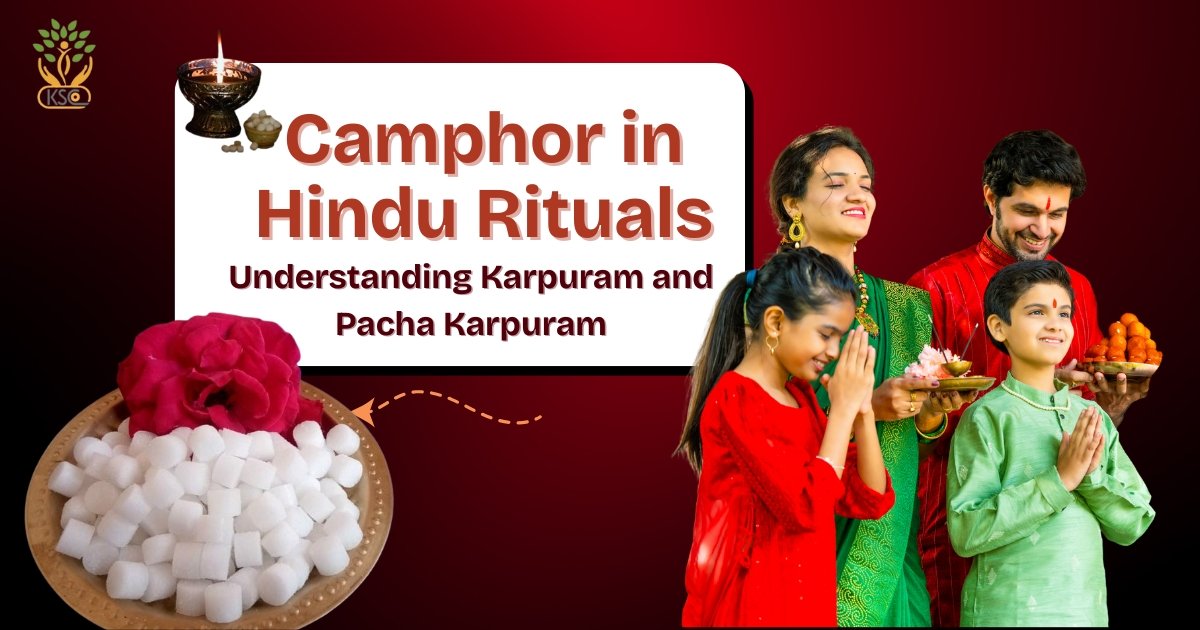
In Hindu worship, camphor holds a quiet but powerful presence. The moment of lighting karpuram during aarti marks the closing of prayer, symbolising clarity, focus, and surrender. In Tamil households, this practice has continued for generations, with both white karpuram and pacha karpuram being used according to custom and preference. Though small in size, camphor plays a meaningful role in daily pooja routines.
The Place of Camphor in Tamil Worship
Camphor is usually lit at the end of pooja. This moment is significant—it represents completion. After prayers, offerings, and lamp lighting, camphor is burned to conclude the ritual. The clean flame and familiar aroma help bring a sense of calm and closure to worship.
What Is Karpuram
White karpuram is the most commonly used form of camphor in households. It is known for its clear flame and quick burning nature. Traditionally, karpuram is placed on an aarti plate and lit during prayer. The flame is waved before the deity, marking the final stage of worship.
Understanding Pacha Karpuram
Pacha karpuram, often recognised by its natural green tone, is also used in devotional practices. Some households prefer it for its steady burning and familiar aroma. Pacha karpuram is commonly chosen during specific rituals and auspicious occasions, depending on family tradition.
Why Camphor Is Burned at the End of Pooja
Burning camphor at the end of pooja symbolises letting go. As camphor burns completely without leaving residue, it represents purity and completeness. This symbolism has been passed down through generations and continues to guide daily worship practices.
Camphor and the Sense of Focus
The aroma of camphor is sharp yet brief. It helps clear distractions and brings attention back to the moment of prayer. Many elders believe this is why camphor is used at the conclusion of worship—to settle the mind before returning to daily activities.
Daily Use Versus Festival Use
In daily pooja, small pieces of camphor are used gently. During festivals and special prayers, slightly larger quantities may be used as part of extended rituals. The usage remains disciplined, with emphasis on purpose rather than quantity.
Handling and Storing Camphor Traditionally
Camphor is always stored carefully, usually in airtight containers away from moisture. Elders often remind that camphor should be handled with respect and kept separate from other items. Proper storage helps maintain its burning quality and aroma.
Camphor as Part of a Complete Pooja Routine
In many homes, camphor is used alongside vilakku lighting and sambrani. Each element serves a role—sambrani sets the atmosphere, the lamp sustains the prayer, and camphor concludes it. This balance reflects the structured nature of traditional worship and the preference for Natural Herbal Products in everyday rituals.
Continuing the Practice in Modern Homes
Even in modern settings, families continue to light camphor during pooja. Though routines may be shorter, the significance remains unchanged. The act of lighting karpuram continues to connect families with tradition, discipline, and cultural memory.
Final Thoughts
Camphor is more than a ritual item. It represents completion, focus, and purity within Hindu worship. Whether white karpuram or pacha karpuram, its use remains deeply rooted in Tamil tradition, reminding families of the simplicity and meaning behind daily prayer.
FAQs
Why is camphor lit at the end of pooja?
It symbolises completion and helps bring focus and calm after prayer.
What is the difference between karpuram and pacha karpuram?
Karpuram is white camphor, while pacha karpuram has a natural green tone and is used based on tradition.
Is camphor used daily in Tamil homes?
Yes, many households light camphor during daily pooja routines.
Can camphor be used during festivals as well?
Yes, camphor is commonly used during festivals and special prayers.
How should camphor be stored at home?
It should be stored in a dry, airtight container away from moisture.